
In the Republic of the Congo and elsewhere in Africa, the foreign homes, medical evacuations and luxury lifestyles of political elites reveal more than personal privilege. They expose a governing class that often has little personal stake in the public services it controls.
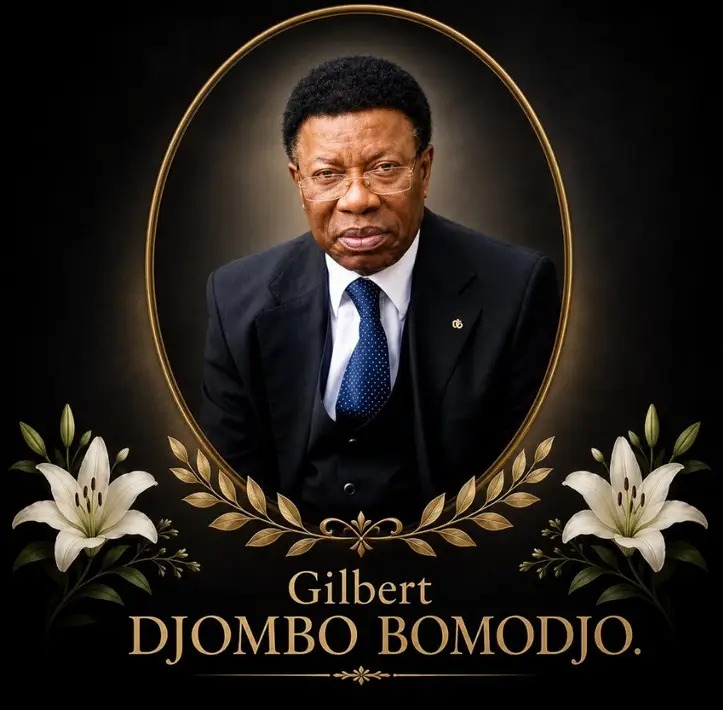
News of the reported death in Paris of Gilbert Djombo Bomodjo, a longtime political and administrative figure in the Republic of the Congo, should first be received with compassion. Death is a moment for mourning, and his family and loved ones deserve condolences.
Djombo Bomodjo was more than a private citizen. For years, he served as prefect of Likouala, the vast northern department whose capital is Impfondo. In public statements, he praised the national government for providing the region with roads, airports, schools and health facilities.
Yet the reported location of his death raises a difficult question that Congolese citizens have encountered repeatedly: Why do so many people who manage the country’s institutions seek refuge abroad when they need those institutions most?
The issue is not that a Congolese citizen traveled to Paris for treatment. Ordinary people have the right to migrate, seek specialized medical care or build a life wherever circumstances allow.
The greater problem arises when public officials, whose salaries and privileges are financed by the state, spend decades supervising hospitals, schools, municipalities and ministries that they apparently do not trust enough to use themselves.
When a mayor, minister, prefect, general or president travels to Paris or elsewhere whenever seriously ill, the journey becomes more than a private medical decision. It becomes a verdict on the public system that person helped govern.
A government with an emergency exit:
A country functions differently when its leaders must live with the consequences of their decisions.
A minister whose children attend an overcrowded public school has an immediate reason to improve education.
A governor who travels on damaged roads experiences the cost of neglect.
A senior official who must receive care in a national hospital has an interest in ensuring that the hospital has competent specialists, functioning equipment, medicines, electricity and ambulances.
But when political leaders possess what amounts to an emergency exit from the country, that relationship between power and consequence is broken.
Their children can study in Europe, North America or the Middle East. Their families can live in homes in Paris, Dubai, London or Washington. When illness strikes, they can board a plane. When political uncertainty grows, their relatives, money and property may already be safely located elsewhere.
Ordinary citizens have no comparable escape route.They wait in local hospitals. They search for medicines. They collect contributions from relatives. They travel long distances from rural communities. Some die from conditions that could have been treated if the health system were adequately equipped.
This is one of the less discussed mechanisms through which inequality sustains itself. Public officials do not merely possess more money than the population. They are able to withdraw personally from the systems they are responsible for maintaining.
An oil-producing country where poverty remains widespread
The Republic of the Congo is an oil producer with substantial natural wealth. The World Bank reported that the country’s total wealth nearly doubled between 1995 and 2020, supported by its natural resources and investments made during periods of high oil revenue.
Yet health and education spending has fluctuated with oil cycles, limiting improvements in living standards. Despite decades of oil production, the World Bank estimated that approximately half of the population remained below its applicable international poverty line. An earlier estimate found that the share living on less than $2.15 per day had risen from 33 percent in 2014 to 52.5 percent in 2022.
These figures make elite spending abroad politically important.One official’s apartment in Paris or medical stay in Dubai will not, by itself, transform a national health system. But the problem is cumulative.
Consider the combined foreign expenditure of presidents, ministers, parliamentarians, generals, mayors, directors of state-owned companies, senior civil servants and members of their families.
Add the homes, tuition fees, hospital bills, luxury vehicles, household expenses, private security, international flights and money held in foreign accounts.
The total represents capital that does not circulate through Congolese businesses, hospitals, universities or communities.More importantly, it represents the disappearance of political pressure.
Officials who can purchase private solutions abroad have fewer personal incentives to construct effective public solutions at home.
The foreign property question:
It would be irresponsible to assume that every Congolese official with property abroad stole public money. Some may have inherited wealth, operated legitimate businesses, earned income before entering government or obtained lawful financing.
But public office carries a duty of explanation.When an official’s visible lifestyle appears dramatically greater than what his or her public salary could reasonably support, citizens are entitled to ask where the money came from. That is democratic accountability.
The question is particularly urgent in Congo-Brazzaville because investigations have documented extensive foreign property holdings connected to members of the country’s political elite.
French inquiries into the so-called biens mal acquis, or ill-gotten assets, have examined whether properties connected to African ruling families were financed with misappropriated public money.
Earlier police findings reportedly identified numerous properties and bank accounts linked to the family of President Denis Sassou Nguesso. The existence of an investigation does not establish the guilt of every person involved, but it demonstrates that concerns about unexplained foreign wealth are based on more than political rumor.
More recent reporting based on leaked Dubai property records found that Nathalie Boumba-Pembe, a daughter-in-law of the Congolese president, acquired a villa valued at approximately €3.5 million.
The same investigation reported that Interior Minister Raymond Zéphirin Mboulou acquired a villa and two apartments in Dubai in 2016, followed by additional properties, with the reported purchases totaling millions of euros.
Those named should have the opportunity to explain the lawful sources of the funds. These examples are relevant because they involve people at the highest levels of the same government that regularly describes Congo as a country with limited resources.
The contradiction is difficult to ignore. The state may be presented as poor when citizens request hospitals, running water, electricity or better schools.
Yet individuals connected to the state can appear extraordinarily wealthy when purchasing property abroad.Congo may therefore be experiencing not only poverty, but what might be called pseudo-poverty: a condition in which resources exist, but public institutions and ordinary citizens cannot access them because wealth is concentrated, mismanaged or transferred elsewhere.
Congo is not alone. The pattern extends beyond the Republic of the Congo. In neighboring Equatorial Guinea, another oil-producing country, French courts convicted Vice President Teodoro Nguema Obiang Mangue in an ill-gotten-assets case.
France’s highest court upheld the conviction and the confiscation of assets valued at approximately €150 million. In the United States, he previously agreed to relinquish more than $30 million in assets that the Department of Justice said had been purchased with corruption proceeds.
The case demonstrates the scale of development that can be lost through elite consumption. Even a fraction of €150 million could finance clinics, maternity facilities, medical training, ambulances, rural roads or clean-water projects.
In Gabon, French investigators have spent years examining the origin of extensive assets associated with members of the Bongo family. The investigation originated from complaints questioning whether properties in France had been acquired through the diversion of public money.
A French investigating judge concluded that phase of the inquiry in 2025, with the possibility of a trial remaining. Medical travel offers another visible expression of the same separation between leaders and public institutions.
Zimbabwe’s former president Robert Mugabe regularly sought medical care in Singapore and died in a hospital there in 2019.
Nigeria’s former president Muhammadu Buhari spent extended periods receiving treatment in London while governing a country of more than 180 million people.
Earlier analyses found that several African leaders who died in office had been receiving treatment outside their own countries.
Not every foreign medical visit represents corruption. Certain complicated procedures require specialists or technologies that may not be available locally. Presidents also have unusual security and continuity-of-government needs.
But decades of recurring medical evacuations by the same people ruling the country show that leaders have normalized the failure of domestic health systems while protecting themselves from its consequences.
The hidden cost of elite detachment:
The financial cost is only one part of the damage.The greater cost is institutional abandonment.A political elite that educates its children abroad may tolerate deteriorating universities.
An elite that stores wealth abroad may tolerate an unstable banking system. An elite that imports nearly everything it consumes may have little interest in building local industries.
An elite that receives medical treatment in Paris may inaugurate hospitals at home without ensuring that they remain properly staffed, supplied and maintained.
The Republic of the Congo has constructed and renovated health facilities, and the country has undertaken reviews intended to identify weaknesses in its health system.
Buildings, however, do not automatically produce reliable health care. A hospital also requires trained personnel, maintenance budgets, medicines, laboratories, electricity, functioning equipment, accountable management and systems that remain operational after the inauguration ceremony.
Foreign medical treatment by senior officials can therefore serve as an informal performance indicator. When those with the most information about the national system refuse to entrust their own lives to it, citizens have reason to question official claims of progress.
What accountability could look like:
Condemning every official who travels abroad will not solve the problem. Congo needs enforceable rules that make wealth and public spending easier to examine.
First, senior public officials should be required to declare their assets before entering office, update those declarations annually and submit to an audit when they leave. The declarations should cover foreign property, companies, trusts, bank accounts and assets held by spouses or dependent children.
Second, officials should have to document income earned outside government. When a minister purchases property worth several million euros, the public should be able to determine whether the purchase is consistent with declared earnings.
Third, government-funded medical evacuation should be limited to cases approved by an independent medical panel. The cost, destination and medical justification should be reported to an oversight institution, while protecting the patient’s legitimate medical privacy.
Fourth, Parliament could require that a portion of the money spent on an official’s foreign treatment be matched by an equivalent public investment in the relevant domestic specialty. If the state pays to send an official abroad for cardiac surgery, it should also invest in cardiology services at home.
Fifth, Congo needs stronger beneficial-ownership rules. The true owners of companies, real estate and government contractors should be publicly identifiable. Property registered through relatives or shell companies should not automatically remain beyond scrutiny.
Sixth, international financial centers must accept responsibility. Paris, London, Dubai, Geneva and other cities benefit when politically exposed people move questionable wealth into real estate, companies and luxury goods. African corruption is not only an African transaction. It requires foreign banks, lawyers, accountants, property agents and jurisdictions willing to receive the money.
Finally, Congolese citizens, journalists and civil society organizations need access to budget documents, procurement records, asset declarations and information about oil revenue. People cannot hold leaders accountable using information they are legally or practically prevented from obtaining.
Mourning without surrendering the right to question:
It is possible to express condolences to Gilbert Djombo Bomodjo’s family while also reflecting critically on the political system in which he served.The purpose is not to prosecute a deceased individual through public opinion. Without evidence of personal wrongdoing, he should not be declared corrupt simply because he reportedly died in Paris.
But his reported death abroad can still prompt a legitimate national conversation.How many Congolese public officials and their close relatives own homes outside the country? What are their declared salaries? What other income do they receive? How much public money is spent each year on medical evacuations? Which officials receive that support? How much money earned through the country’s oil industry leaves Congo through foreign property, companies and bank accounts? Most importantly, what would Congo’s hospitals, schools, roads and local businesses look like if even part of that capital remained in the country?
The Republic of the Congo does not lack every resource needed for development. It lacks a political arrangement that reliably converts national wealth into public well-being. As long as the people who govern the country can live, study, invest, seek treatment and eventually retire elsewhere, they will never experience the full consequences of the systems they administer. A country changes when public office stops functioning as a route to personal escape and begins functioning as an obligation to build a society in which no escape is necessary.