
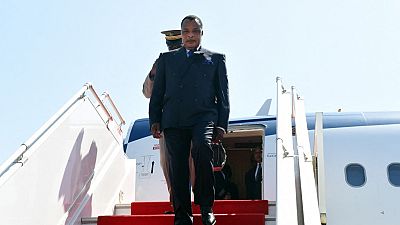
For almost half a century, Congo-Brazzaville has been governed by a single family—the Nguessos—whose rule has dragged the country into a state of decay, humiliation, and global distrust.
Whatever remained of Congo’s prestige has been steadily dismantled by a government that behaves more like a private enterprise than a public authority. A Government That Governs Only Itself.
Under Denis Sassou Nguesso’s entrenched rule, Republic of the Congo has become a textbook example of how a nation collapses from the top down.
Critics—both inside the country and across the diaspora—have long accused the Nguesso regime of entrenching corruption, siphoning national wealth, and silencing anyone who dares challenge their grip on power.
Independent observers and human rights organizations echo these concerns, citing systemic abuses, political repression, and the disappearance of political opponents.
While the government routinely denies wrongdoing, the evidence of state failure surrounds every citizen: crumbling schools, decaying hospitals, unpaid civil servants, and a ruling elite living in luxury that the country’s economy cannot justify.
This week, the United States made clear how far Congo-Brazzaville has fallen in the eyes of the world.
USCIS announced new national security measures that allow immigration officers to factor in negative country-specific indicators—and Congo-Brazzaville appears among the 19 high-risk countries affected.
This is a global embarrassment. To be listed alongside nations destabilized by war, terrorism, or state collapse reflects a damning judgment: under the Nguessos, Congo is no longer trusted to enforce the rule of law or control corruption. USCIS explicitly states that the U.S. will now scrutinize immigrants from countries whose governments fail basic governance and security standards.
Congo’s inclusion is therefore a direct consequence of years of mismanagement, opacity, and authoritarian excess.
The Nguessos have governed for decades, but governance is precisely what they have never delivered. Congo should be one of Africa’s most prosperous nations. Instead, it has been reduced to a financially bankrupt state, a politically suffocated society, and an internationally mistrusted partner.
This happened because the ruling family placed its survival above the survival of the state. Punishing Critics Instead of Fixing Governance. The regime’s obsession with silencing critics reveals a deep insecurity: the Nguessos know the country has deteriorated on their watch. Instead of accepting accountability, they attack journalists, harass reformers, and intimidate anyone who calls for basic institutional competence.
The simple truth is this: A government that fears criticism is always a government with something to hide. By punishing cracking down on critics, the Nguessos have not strengthened Congo. They have only confirmed to the world that even constructive criticism is treated as a threat—because the regime cannot defend its record.
Congo-Brazzaville today is a shadow of what it could be. It is a nation with wealth but no prosperity, citizens but no rights, institutions but no power, and rulers but no legitimacy.
Rebuilding Congo will require more than reforms; it will require the end of the political culture the Nguessos created—where the state serves the family, not the people. True renewal will come only when institutions outweigh personalities, accountability outweighs impunity, and citizens outweigh rulers. Until then, Congo will continue to pay the price internationally, as it has now with the U.S. security designation—and domestically, where ordinary Congolese suffer the consequences of decisions made by a ruling family that has long stopped pretending to serve them.
As the 2026 presidential election approaches, the real test is whether democracy can assert itself—or whether the Nguessos will once again rig the process and condemn the population to another five years of humiliation.